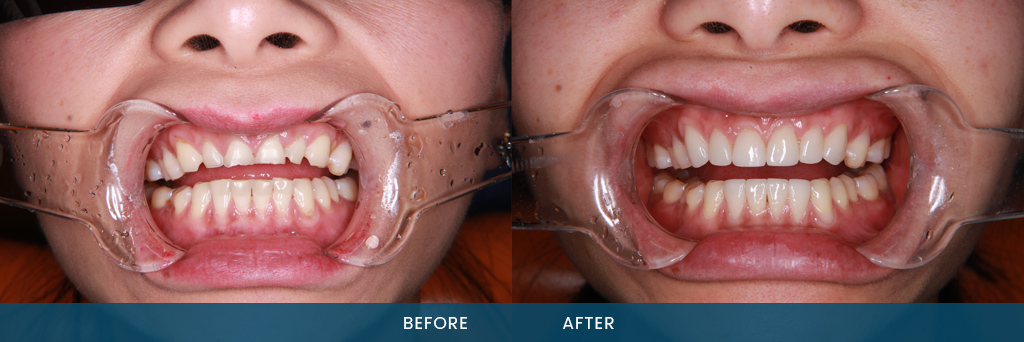
Walking around Melbourne, you notice right away how much a confident, bright smile stands out. It takes some great artistic skill to get the perfect, natural-looking teeth that look beautifully healthy. You need to choose the dental clinic that offers you advanced material science. Most of them assume that a smile makeover happens entirely in the dentist’s chair, but the true magic happens behind the scenes in a specialized dental laboratory. You need to visit a premium and professional dentist who partners with the local master ceramist to achieve the flawless Porcelain Veneers Melbourne treatment.
What makes the initial mock-up step so critical?
The real treatment begins with true artisans with a diagnostic blueprint, rather than starting with immediate tooth alteration. The dental lab creates a physical 3D wax-up or a digital mock-up of the proposed smile. This procedure is done before a single veneer is crafted for the patient. This stage serves as a trial run and is crucial as well. Also, it allows you to literally test your new teeth in real life. The ceramist makes precise adjustments to the length and contour by evaluating how the temporary shapes interact with your lips when you speak and smile.
Why do master ceramists use multi-layered porcelain?
Natural teeth possess gradients of color, deeper saturation near the gumline, and translucent edges that catch the light. There are labs that produce cheap veneers that often look fake as they are made from a single, opaque layer of material. The professional and master technicians meticulously hand-layer different shades of porcelain to replicate nature. Also, they blend various opacities and tints. They build depth from the inside out by firing these layers sequentially in a high-temperature laboratory furnace.
Does the choice of lab impact the final porcelain veneers cost?
When a patient is researching the porcelain treatment options, they often notice the significant variation in pricing. A primary driver of the overall Porcelain Veneers Cost is the source and expertise of the dental laboratory. It is always recommended to utilize a premium, local boutique laboratory where a dedicated technician custom-crafts each individual tooth, which costs more than outsourcing production to massive, overseas commercial labs. This investment ensures the use of biocompatible, TGA-approved materials and prevents future decay.
How is natural translucency and texture achieved?
The surface of the natural tooth isn’t always perfectly glass-smooth. They do have microscopic grooves, ridges, and faint vertical textures that scatter light. On creating the artificial porcelain veneers, the technicians use hand instruments under microscopic magnification to carve these minute surface characteristics. Also, they will keep a keen observation on the incisal translucency and the biting edge, and ensure that it possesses that beautiful quality found in pristine natural teeth.
What role does the dental impression play in fit?
The veneers are useless if it doesn’t perfectly get sealed onto the natural teeth. Even a microscopic gap can harbor bacteria and will also lead to stains and structural failure. It is the reason why the credible technicians demand incredibly high-accuracy impressions. They are done via traditional physical silicones or state-of-the-art intraoral digital scanners. To get the precise models, the premium labs use the models to map out the exact margin or boundary line of the preparation. This ensures that the final porcelain sits entirely flush with your natural tooth.
How is shade matching customized to the individual?
Matching a single veneer to the surrounding natural teeth of a patient is an incredibly subjective science. The professional technicians do not just rely on a standard shade guide; rather, they study high-resolution dental photography that captures how a patient’s teeth look under different lighting conditions. With an experienced and gentle team like that in HawthornEastDental, they will analyze the ambient undertones of the skin, lips, and even the whites of the eyes.