A brighter smile can make you feel more confident in photographs, conversations, and everyday life. Once you decide to whiten your teeth, however, you face another decision. Should you schedule professional teeth whitening with a dentist, or can an at home whitening product deliver the results you want?
Both options can lighten natural teeth, but they differ in speed, strength, supervision, cost, and predictability. The right choice depends on your teeth, the type of discoloration you have, your sensitivity level, and how quickly you want to see a change.
This guide by Dr. Sally Kashani compares professional teeth whitening vs. at home whitening so you can understand what each approach offers and choose the one that fits your smile.
How teeth whitening works
Most effective whitening products use hydrogen peroxide or carbamide peroxide. These ingredients penetrate the enamel and break down colored molecules inside the tooth. As those molecules become smaller, they reflect less color, which makes the tooth look lighter.
People sometimes assume that whitening simply scrubs stains from the surface. Whitening toothpaste can remove some surface discoloration, but peroxide based treatments work differently. They can reach pigments within the enamel and dentin, producing a more noticeable change.
The strength of the whitening agent and the amount of time it stays against your teeth influence the final result. Professional treatments generally use stronger formulas for shorter periods. At home products usually contain lower concentrations and require repeated applications.
What causes tooth discoloration
Not all stains respond to whitening in the same way. Dentists usually divide tooth discoloration into two categories.
Extrinsic stains develop on the surface of the teeth. Coffee, tea, red wine, tobacco, cola, and deeply colored foods can all contribute to them. Professional cleaning may remove some of this discoloration before whitening even begins.
Intrinsic discoloration develops within the tooth. Aging often contributes because enamel gradually becomes thinner and allows more of the yellow dentin underneath to show through. Certain medications, dental injuries, tooth development conditions, and excessive fluoride exposure can also change the internal color of teeth.
Whitening often works well on yellow and light brown discoloration. Gray tones, white spots, tetracycline staining, or a single dark tooth may require a more specialized approach. A dentist can identify the cause before recommending treatment.
What professional teeth whitening involves
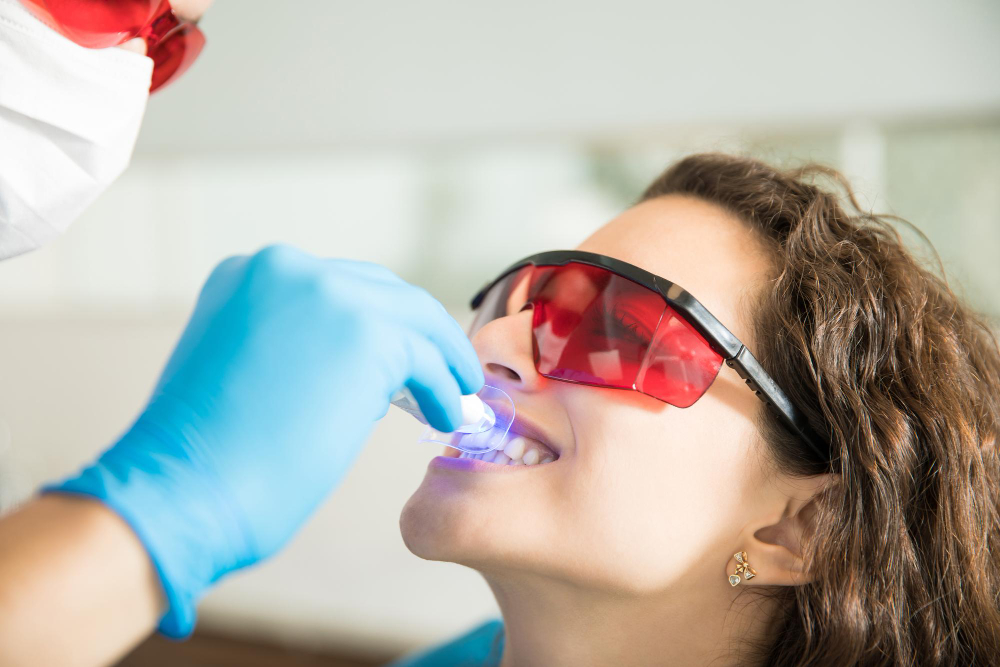
Professional teeth whitening usually takes place in a dental office. Before treatment, the dentist examines your teeth and gums for cavities, cracks, gum irritation, exposed roots, or other problems that could make whitening uncomfortable.
The dental team then protects your lips and gums before applying a concentrated whitening gel to your teeth. Depending on the system, the dentist may apply the gel several times during the appointment. Some systems also use a special light, although the whitening agent itself performs the primary work.
An appointment commonly lasts about one to two hours. Many patients notice a significant improvement after one visit, although difficult stains may require additional treatment or custom trays for home use.
The main advantage involves control. The dentist can adjust the formula, protect sensitive areas, monitor your response, and stop the procedure if you experience discomfort.
What at home whitening includes
At home whitening covers several different product types, so it helps to understand what you are comparing.
Whitening strips contain a thin layer of peroxide gel and attach directly to the front surfaces of the teeth. Most systems require daily use for one or two weeks.
Generic whitening trays hold gel against the teeth, but they may not fit every mouth evenly. Poorly fitting trays can allow gel to reach the gums or miss certain tooth surfaces.
Whitening pens work well for small touch ups, but they rarely produce the same overall change as strips or trays. Whitening toothpaste mainly removes surface stains through mild abrasives and does not usually change the natural color of teeth as dramatically.
Dentists can also provide custom trays for use at home. These trays fit the shape of your mouth and keep the gel close to the teeth while limiting contact with your gums. Custom tray whitening sits between store bought products and an office treatment because it combines home convenience with professional guidance.
Which option delivers faster results
Professional whitening offers the fastest route to a visibly brighter smile. A single office visit can create a noticeable difference, making it appealing before a wedding, graduation, interview, or other important event.
At home products require patience and consistency. You may start noticing a difference within several days, but most products need one to three weeks to reach their full effect. Skipping applications or using the product incorrectly can produce uneven or disappointing results.
Faster does not always mean better for every patient. People with sensitive teeth may prefer a gradual process with a milder formula. The best treatment balances your desired shade with the comfort and health of your teeth.
Comparing the final results
Professional teeth whitening usually produces a more even and predictable outcome because the dentist applies the gel carefully and controls the treatment time. It can also address areas that whitening strips may not cover well.
At home whitening can still produce satisfying results, especially for mild yellowing and surface stains. Product quality, peroxide concentration, application time, and consistency all affect the outcome.
Your natural tooth color also sets a limit. Whitening can brighten your existing enamel, but it cannot give everyone the same shade. Teeth naturally vary in tone, translucency, and response to peroxide.
A natural result often looks better than an extremely white one. When I compare smiles, I usually find that even color and healthy looking enamel matter more than reaching the lightest possible shade.
Understanding tooth sensitivity
Sensitivity ranks among the most common concerns with teeth whitening. Peroxide can temporarily increase sensitivity to cold air, cold drinks, and certain foods. Some people also experience gum irritation when whitening gel touches soft tissue.
The American Dental Association identifies temporary tooth sensitivity and gum inflammation as the most common adverse effects of whitening. These symptoms usually improve after treatment ends, but product strength, treatment duration, existing sensitivity, and exposed roots can influence their severity.
You can reduce discomfort by following the recommended treatment schedule, avoiding longer application times, and taking breaks between sessions when necessary. A toothpaste designed for sensitive teeth may also help when you begin using it before treatment.
Do not assume that more gel or more time will create a better result. Overusing a whitening product can increase discomfort without delivering a meaningful improvement.
Crowns, veneers, fillings, and implants will not whiten
This point surprises many people. Whitening agents change the color of natural tooth structure, but they do not lighten crowns, veneers, implants, bridges, or tooth colored fillings.
If you have a crown on a front tooth, whitening the surrounding teeth could create a visible color difference. Your dentist may recommend whitening first and then matching a new restoration to the lighter shade. If you already have restorations, the dentist can help you predict how treatment may affect the overall appearance of your smile.
A single dark tooth also needs professional evaluation. Previous trauma or problems inside the tooth can cause isolated discoloration, and standard whitening strips may not correct it.
Comparing the cost
At home products offer the lowest initial cost. Whitening toothpaste, pens, and strips usually fit modest budgets, although repeated purchases can increase the total expense over time.
Custom take home trays from a dentist cost more than store bought products, but the trays can last for years when you care for them properly. You may only need additional gel for future touch ups.
Professional office whitening costs the most because it includes stronger materials, gum protection, clinical supervision, and faster results. Dental insurance usually considers whitening a cosmetic procedure and does not cover it.
Price matters, but it should not stand alone. Consider how much correction you need, how quickly you want results, and whether existing dental work or sensitivity could complicate treatment.
How long whitening results last
Neither professional nor at home whitening produces permanent results. Coffee, tea, red wine, tobacco, and normal aging can gradually darken the teeth again.
You can help your results last longer by rinsing with water after consuming dark beverages, brushing twice daily, flossing regularly, and scheduling professional cleanings. Drinking iced coffee or tea through a straw may also reduce contact with the front teeth.
You do not need to avoid every food that has color. Consistent oral hygiene and occasional touch ups usually offer a more realistic plan.
Who should talk to a dentist before whitening
A dental examination makes sense if you have cavities, gum disease, cracked teeth, exposed roots, severe sensitivity, extensive restorations, or one tooth that looks much darker than the others. Whitening over an untreated problem can increase pain and delay necessary care.
Pregnant or nursing patients should also speak with their dentist before starting an elective whitening treatment. Children and teenagers need professional guidance because their teeth and mouths continue to develop.
Avoid unproven whitening trends that use lemon juice, harsh abrasives, undiluted peroxide, or charcoal powders. Acidic and abrasive mixtures can wear the enamel while producing little meaningful whitening. Once enamel wears away, it does not grow back.
When shopping for an over the counter product, read the directions carefully and consider choosing one with the ADA Seal of Acceptance. The seal indicates that the ADA reviewed evidence supporting the product’s safety and effectiveness for its stated purpose.
How to choose the right whitening option
Professional teeth whitening may suit you if you want fast, noticeable results, have significant staining, need an even outcome, or prefer treatment under a dentist’s supervision.
At home whitening may work well if you have mild discoloration, want a less expensive option, feel comfortable following a daily schedule, and do not have untreated dental problems. Dentist provided custom trays offer a useful middle ground for people who want professional guidance without completing the entire treatment in the office.
Start by asking what you actually want to change. If you only want to remove coffee stains, a professional cleaning and a quality whitening toothpaste may provide enough improvement. If you want several shades of change before an important event, professional whitening may offer a more reliable route.
A brighter smile starts with the right plan
The choice between professional teeth whitening and at home whitening does not have one universal answer. Professional treatment offers speed, supervision, and predictable coverage. At home products offer convenience, affordability, and gradual results.
Before choosing either option, consider the cause of your discoloration, the condition of your teeth, your existing dental restorations, and your history of sensitivity. A brief conversation with your dentist can prevent discomfort, protect your dental work, and help you set realistic expectations.
The safest and most satisfying result does more than make teeth look whiter. It keeps your smile healthy, balanced, and naturally bright.
Author: https://hollywood-dentist.com/